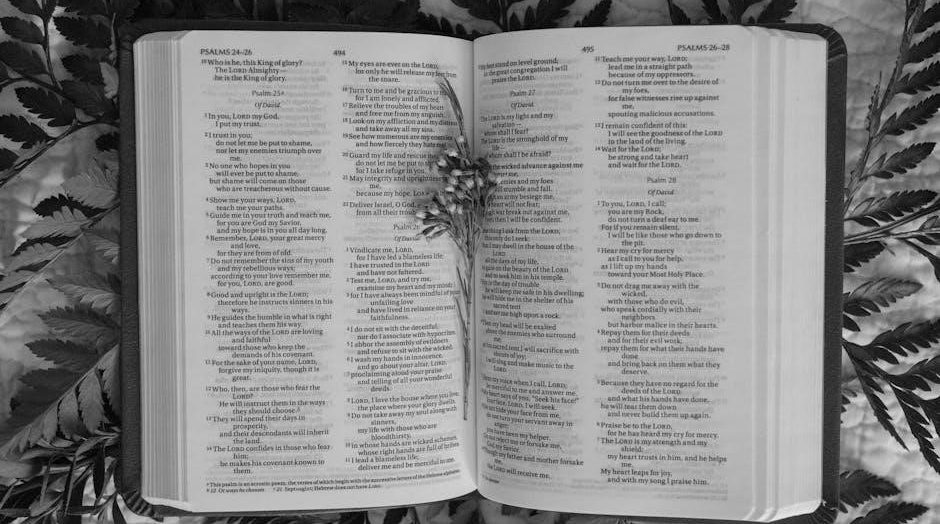
Embark on a transformative journey! This 12-week study, utilizing resources like Ligonier Ministries, delves into the Psalms’ beauty, structure, and profound themes.
Overview of the Psalms
The Book of Psalms, a cornerstone of biblical poetry and worship, comprises 150 individual songs, prayers, and poems. These diverse expressions reflect the full spectrum of human emotion – from exuberant joy and heartfelt praise to profound lament and desperate pleas for help. Dr. W. Robert Godfrey’s teaching series highlights this beauty, aiming to foster a deeper love for these ancient texts.
Historically, the Psalms were likely compiled over centuries, drawing from various authors and contexts. They served as the hymnbook for ancient Israel, used in temple worship and personal devotion. Studying Psalm 72, for example, prompts reflection on its central theme and the king’s role, potentially foreshadowing a greater King. A 12-week study provides a structured approach to navigate this rich collection, unlocking its timeless wisdom and spiritual power.
The Importance of Studying the Psalms
Engaging with the Psalms offers a unique pathway to connect with God on a deeply personal level. These inspired verses articulate universal human experiences, providing a voice for our joys, sorrows, fears, and hopes. A 12-week study, like those offered through resources such as Ligonier Ministries, allows for focused exploration of these themes.
Furthermore, the Psalms model authentic prayer and worship, teaching us how to approach God with honesty and vulnerability. Understanding the historical and literary context, even delving into Biblical Hebrew, enriches our comprehension. Studying Psalms like 72 encourages contemplation of kingship and divine requests. Ultimately, consistent study cultivates emotional and spiritual growth, fostering a more intimate relationship with the Divine.

Understanding the Structure of the Psalms
Discover the Psalms’ organization! Explore the five books within, and various psalm types – hymns, laments, thanksgiving, royal, and wisdom – for deeper insight.
The Five Books of Psalms
A deliberate literary arrangement characterizes the Book of Psalms, divided into five distinct books: Books I-II (Psalms 1-41 & 42-72) often reflect Davidic authorship and themes of kingship and covenant. Book III (Psalms 73-89) explores themes of suffering, trust, and God’s faithfulness amidst adversity.
Book IV (Psalms 90-106) features psalms attributed to Moses and Asaph, focusing on God’s enduring character and Israel’s historical relationship with Him. Finally, Book V (Psalms 107-150) culminates in a grand chorus of praise, emphasizing God’s universal sovereignty and the importance of worship.
This five-part structure isn’t accidental; it mirrors the Pentateuch, the first five books of the Old Testament, suggesting a deliberate intention to present the Psalms as a complete and comprehensive collection of Israel’s worship and theological reflection.
Psalm Types: Classification and Characteristics
Diverse expressions of faith define the Psalms, categorized into distinct types. Hymns of Praise (like Psalm 19) exalt God’s attributes and creation. Laments (Psalm 22) voice sorrow, petitioning God’s intervention in times of trouble – often including imprecatory elements.
Thanksgiving Psalms (Psalm 107) express gratitude for deliverance and blessings received. Royal Psalms (Psalm 72) focus on the king, often with messianic implications, highlighting his role in God’s kingdom. Finally, Wisdom Psalms (Psalm 1) offer instruction on righteous living and the benefits of following God’s ways.
Understanding these classifications enhances appreciation for the Psalms’ multifaceted nature and their relevance to various life experiences, enriching a 12-week study.
Hymns of Praise
Exuberant celebrations of God’s glory characterize Hymns of Praise within the Psalms. These psalms, like Psalm 8 and 19, focus on God’s majestic attributes – His power, holiness, and creative brilliance. They often depict God’s sovereignty over creation and His steadfast love for humanity.
A key feature is the call to worship, inviting all creation to join in acknowledging God’s greatness. These psalms aren’t merely descriptive; they’re participatory, encouraging believers to actively praise and adore God. Studying these hymns fosters a deeper sense of awe and reverence.
Within a 12-week study, analyzing these psalms cultivates a heart attuned to continuous praise and thanksgiving.
Laments
Raw expressions of pain and sorrow define the Psalms of Lament. Often arising from times of distress – personal hardship, national crisis, or perceived abandonment – these psalms honestly voice feelings of anguish, fear, and helplessness. Psalm 22 and 35 exemplify this genre, directly addressing God amidst suffering.
However, laments aren’t simply complaints. They typically include a plea for God’s intervention, a declaration of trust in His character, and often conclude with an expression of hope or anticipation of deliverance.
A 12-week study reveals how these psalms model healthy emotional processing and demonstrate God’s compassionate presence even in darkness.
Thanksgiving Psalms
Overflowing with gratitude and praise, Thanksgiving Psalms celebrate God’s faithfulness and specific acts of deliverance. These aren’t generalized expressions of thankfulness, but detailed recollections of God’s intervention in challenging circumstances. They vividly portray the psalmist’s joy and relief.
Often, these psalms include a call to others to join in the praise, recognizing that God’s goodness is worthy of communal celebration. They serve as powerful reminders to acknowledge and appreciate God’s blessings, even amidst ongoing struggles.
A focused 12-week study highlights how these psalms cultivate a heart of thankfulness and deepen our relationship with a gracious God.
Royal Psalms
Focused on the kingly role of God and the earthly king, Royal Psalms explore themes of divine kingship, the king’s responsibilities, and the covenant between God and David’s lineage. These psalms often depict the king as God’s representative, tasked with establishing justice and righteousness.
A 12-week study reveals how these psalms foreshadow the ultimate King – Jesus Christ – and His eternal reign. They highlight the qualities of a righteous ruler and the blessings of a kingdom governed by God’s principles.
Examining these psalms provides insight into God’s sovereign authority and the hope for a future kingdom of peace and justice.
Wisdom Psalms
Delving into practical living and moral instruction, Wisdom Psalms offer guidance on navigating life’s challenges with godly discernment. These psalms explore themes of righteousness, justice, the fear of the Lord, and the blessings of a life lived in accordance with God’s principles.
A 12-week study illuminates how these psalms provide timeless wisdom applicable to everyday situations, encouraging believers to seek understanding and make wise choices. They often contrast the paths of the righteous and the wicked.
Through poetic imagery and insightful observations, Wisdom Psalms reveal the path to true happiness and fulfillment found in a relationship with God.

Historical and Literary Context
Understanding the Psalms’ origins is key! Explore authorship, dating, and the vital role of music within ancient Israelite worship and its literary forms.
Authorship of the Psalms
Delving into the identities behind these sacred songs reveals a rich tapestry of contributors. While traditionally attributed to David, the Psalms showcase a diverse range of authorship. The superscriptions – headings above each Psalm – often name authors like Asaph, the sons of Korah, Ethan the Ezrahite, and Moses. However, scholarly debate surrounds the accuracy and reliability of these attributions.
Some Psalms remain anonymous, adding to the mystery. David’s prolific contribution is undeniable, reflecting his life as a shepherd, warrior, king, and man after God’s own heart. Yet, recognizing multiple authors highlights the communal nature of Israel’s worship and the collective expression of faith across generations. Understanding authorship enhances our appreciation for the varied perspectives and experiences woven into the Psalter’s fabric.
Dating the Psalms
Establishing a precise timeline for the Psalms’ composition presents a complex challenge. The collection spans centuries, originating from the time of Moses (Psalm 90) to the post-exilic period following the Babylonian exile (Psalm 137). Internal evidence, such as references to historical events and liturgical practices, provides clues. However, these are often open to interpretation.
Many Psalms are linked to David’s reign (1000 BC), while others reflect the temple worship established by Solomon. Later Psalms likely emerged during times of national crisis or restoration. Determining dates relies on careful textual analysis and historical context. Recognizing the Psalms’ evolving composition helps us understand their relevance across different eras of Israel’s history and their enduring message for today.
The Role of Music in the Psalms
Music was integral to the original context of the Psalms. Many headings indicate specific musical settings or liturgical uses – “for the director of music” or “a Psalm of Asaph.” These instructions suggest the Psalms weren’t simply poems for private reading, but songs intended for public worship within the temple.
Instruments likely accompanied the singing, enhancing the emotional and spiritual impact. While the exact melodies are lost, the poetic structure and parallelism hint at rhythmic patterns suited for musical expression. Understanding this musical dimension enriches our appreciation of the Psalms, reminding us they were designed to be sung praises to God, fostering communal worship and heartfelt devotion.
Key Themes in the Psalms
Explore recurring motifs! Discover God’s sovereignty, trust in His protection, heartfelt repentance, and prophetic glimpses of the Messiah and His glorious kingdom.
God’s Sovereignty and Kingship
A central tenet throughout the Psalms is the unwavering declaration of God’s absolute sovereignty and majestic kingship. These aren’t merely abstract concepts; they are powerfully woven into the fabric of poetic expression, consistently affirming God’s control over creation, history, and the hearts of individuals.
Many Psalms, particularly those categorized as Royal Psalms, directly address or allude to the earthly king, but always with a higher purpose – to reflect the ultimate authority of the divine King. Psalm 72, for example, requests wisdom and justice for the king, anticipating a ruler who embodies God’s righteous character.
This theme extends beyond political power, encompassing God’s dominion over all forces, both seen and unseen. Studying these passages reveals a God who is not distant or indifferent, but actively involved in governing the universe according to His perfect will, offering comfort and assurance to those who trust in Him.
Trust in God’s Protection
The Psalms repeatedly emphasize finding refuge and unwavering trust in God’s protective care, especially during times of adversity. This isn’t a passive hope, but an active reliance on a God who is portrayed as a fortress, shield, and deliverer from all harm.
Many Laments, while expressing pain and vulnerability, ultimately pivot towards a declaration of faith in God’s ability to rescue and defend. Even in moments of disorientation, the Psalmist remembers God’s past faithfulness and anticipates future intervention.
This theme resonates deeply with the human experience, acknowledging the reality of suffering while simultaneously offering a pathway to peace through complete dependence on a sovereign God. A 12-week study reveals how consistently this message of protection is presented, offering enduring comfort and strength.
Repentance and Forgiveness
The Psalms offer a raw and honest portrayal of human sinfulness, coupled with a profound understanding of God’s gracious forgiveness. Psalms of Disorientation, like Psalm 51, vividly depict the anguish of a contrite heart acknowledging transgression and pleading for cleansing.
These aren’t merely expressions of guilt, but active turning towards God, seeking restoration and a renewed relationship. The Psalmist doesn’t shy away from confessing specific failings, demonstrating the importance of genuine repentance.
A 12-week study highlights how consistently forgiveness follows sincere confession, reinforcing the message of God’s boundless mercy. This theme provides hope and encourages believers to approach God with humility and a willingness to turn from sin.
The Messiah and His Kingdom
A significant thread woven throughout the Psalms is the anticipation of the Messiah and the establishment of His eternal kingdom. Messianic Psalms, particularly those explored in Weeks 10-12 of a 12-week study, reveal prophecies pointing to Jesus Christ.
Psalms like Psalm 2 and 16 foreshadow the Messiah’s suffering, death, and ultimate triumph. Psalm 110 proclaims the Messiah’s divine authority and priestly role. These aren’t isolated verses, but integral parts of a larger narrative.
Studying these Psalms unveils how the Old Testament consistently points towards the fulfillment found in Jesus, demonstrating God’s redemptive plan unfolding throughout history and establishing His everlasting reign.

A Week-by-Week Study Guide Outline
This 12-week guide progresses through Psalms of Orientation, Disorientation, and Reorientation, culminating in a focused exploration of key Messianic Psalms.
Weeks 1-3: Psalms of Orientation (e.g., Psalms 1, 8, 19)
Begin with foundational Psalms expressing a confident trust in God’s created order and His benevolent rule. Focus on Psalms 1, 8, and 19 as prime examples, examining how they establish a worldview centered on God’s sovereignty. Consider Psalm 72, summarizing its theme and the king’s promised actions.
These initial weeks aim to cultivate a sense of awe and wonder at God’s majesty revealed in creation and His righteous governance. Explore how these Psalms address fundamental questions about life, purpose, and humanity’s relationship with the divine. Utilize study guides to deepen understanding, and contemplate the initial request made within Psalm 72.
Weeks 4-6: Psalms of Disorientation (e.g., Psalms 22, 35, 51)
Transition into the raw honesty of Psalms expressing pain, suffering, and feelings of abandonment. Explore Psalms 22, 35, and 51, recognizing their vulnerability and desperate pleas for God’s intervention. These Psalms grapple with the harsh realities of life and the challenges to faith.
Delve into the emotional depth of these laments, acknowledging the legitimacy of expressing doubt and anguish before God. Consider how Psalm 51 exemplifies repentance and the longing for restoration. Utilize resources to understand the historical context and literary features, fostering empathy and a deeper connection with the Psalmist’s struggles.
Weeks 7-9: Psalms of Reorientation (e.g., Psalms 46, 63, 103)
Experience the shift towards renewed hope and trust in God’s unwavering faithfulness. Focus on Psalms 46, 63, and 103, observing how they move from despair to confident praise. These Psalms demonstrate God’s power, protection, and enduring love, even amidst life’s difficulties.

Analyze how the Psalmist rediscovers joy and finds strength in God’s presence. Psalm 103, in particular, highlights God’s compassionate character and forgiveness. Utilize study guides to unpack the imagery and metaphors, deepening your understanding of God’s restorative work. Reflect on personal experiences and how these Psalms offer comfort and encouragement.
Weeks 10-12: Messianic Psalms (e.g., Psalms 2, 16, 22, 110)
Uncover the prophetic glimpses of Jesus Christ woven throughout the Psalms. Explore Psalms 2, 16, 22, and 110, recognizing how they foreshadow the Messiah’s identity, suffering, and ultimate triumph. Consider how these ancient texts find their ultimate fulfillment in Jesus’ life, death, and resurrection.
Utilize study resources to trace the connections between these Psalms and New Testament passages. Analyze the themes of kingship, sacrifice, and victory, understanding their significance in light of Christ’s redemptive work. Reflect on the profound implications of these prophecies for your faith and witness. Deepen your appreciation for God’s plan of salvation revealed through the Psalms.
Resources for Deeper Study
Expand your understanding! Explore Biblical Hebrew, interactive online courses, and comprehensive study guides and commentaries to enrich your Psalms exploration.
Biblical Hebrew and the Psalms
Unlocking Deeper Meaning Through the Original Language: A profound appreciation for the Psalms blossoms when approached through the lens of Biblical Hebrew. The nuances of the original language reveal layers of meaning often lost in translation; Studying the Hebrew poetry, parallelism, and word choices unveils the artistry and theological depth embedded within each Psalm.
Resources are available to facilitate this exploration, including online interactive courses dedicated to Biblical Hebrew, Greek, and Aramaic. These courses empower individuals to independently analyze the text, gaining a richer understanding of the Psalmist’s intent and the cultural context. Delving into the Hebrew roots enhances comprehension of key themes like God’s sovereignty, trust, repentance, and the Messianic prophecies woven throughout the Psalms. This linguistic journey transforms passive reading into active engagement with the sacred text.
Study Guides and Commentaries
Enhancing Your Psalm Exploration: To maximize your 12-week study, supplementing your reading with quality study guides and commentaries is invaluable. Workbooks designed for Bible classes, family studies, or personal devotion provide structured frameworks for deeper engagement. These resources often include insightful questions, thematic summaries, and contextual background information.

Consider guides that prompt you to analyze individual Psalms, like Psalm 72, focusing on identifying central themes and key requests within the text. Commentaries offer scholarly perspectives, illuminating historical context, literary devices, and theological implications. They bridge the gap between ancient text and modern understanding, enriching your personal interpretation and fostering a more profound connection with the Psalms’ enduring wisdom.
Online Resources and Tools
Digital Pathways to Deeper Understanding: The digital age offers a wealth of resources to complement your 12-week Psalms study. Interactive online courses provide opportunities to learn Biblical Hebrew, Greek, and Aramaic, unlocking the nuances of the original text and deepening your comprehension. These platforms often feature detailed lexical studies and grammatical analyses, revealing layers of meaning previously inaccessible.
Numerous websites and tools offer Psalm commentaries, concordances, and interlinear Bibles, facilitating in-depth exploration. Explore resources that provide historical context and literary insights, enhancing your understanding of the Psalms’ cultural and theological landscape. Leverage these digital tools to enrich your personal study and foster a more profound connection with these timeless expressions of faith.

Applying the Psalms to Daily Life
Transformative Power: Integrate the Psalms into your prayer life and worship, fostering emotional and spiritual growth through their timeless wisdom and heartfelt expressions.
Prayer and Worship
The Psalms as a Prayer Book: The Book of Psalms inherently serves as a divine prayer book, offering a rich tapestry of expressions suitable for personal and communal worship. Through a 12-week study, like those offered by resources such as Ligonier Ministries, individuals can learn to utilize the Psalms as templates for their own prayers, mirroring the emotions and petitions found within their verses.
Expanding Your Prayer Life: Explore how the Psalms model both adoration and lament, enabling a more honest and comprehensive approach to communicating with God. Discover how to incorporate the poetic language and imagery of the Psalms into your worship, enriching your connection with the divine. Utilize study guides to unpack the meaning behind specific Psalms, allowing for deeper reflection and more meaningful prayer experiences.
Liturgical Use & Personal Devotion: Consider the Psalms’ historical role in liturgical worship and adapt their themes to your personal devotional practices, fostering a consistent and vibrant prayer life.
Emotional and Spiritual Growth
Navigating Life’s Complexities: A 12-week Psalms study, supported by resources like those from Ligonier Ministries, provides a powerful framework for emotional and spiritual maturation. The Psalms honestly portray the full spectrum of human experience – joy, sorrow, doubt, and faith – offering relatable models for processing life’s challenges.
Finding Resonance with Raw Emotion: Through examining Psalms of lament, individuals can learn healthy ways to express grief and pain to God. Conversely, Psalms of praise cultivate gratitude and joy, fostering a more optimistic outlook; Study guides encourage introspection, prompting self-assessment and spiritual growth.
Deepening Faith & Resilience: By consistently engaging with the Psalms, participants can develop greater resilience, a stronger faith, and a deeper understanding of God’s character and unwavering love.