
Frigidaire Range Owners Manual: A Comprehensive Guide (Updated 04/14/2026)
Welcome! This manual, dated today – 04/14/2026 at 09:09:49 – is designed to expertly guide you through utilizing all features of your new Frigidaire gas range.
Congratulations on your purchase of a Frigidaire range! This section introduces you to the comprehensive resources available to ensure optimal performance and longevity of your appliance. This owner’s manual serves as your primary guide, detailing features, operation, maintenance, and troubleshooting steps.
Before proceeding, please carefully read this entire manual to familiarize yourself with all safety precautions and operating instructions. Proper use will maximize efficiency and minimize potential risks. To properly identify your specific model, locate the model and serial number label.
This label is typically found on the range frame, behind the storage drawer, or on the back panel. Record this information for future reference, warranty claims, or when contacting Frigidaire customer support. Knowing your model number allows us to provide tailored assistance and accurate replacement parts if needed. We are thrilled you chose Frigidaire!
Safety Precautions
Your safety is paramount. This section outlines crucial safety precautions to prevent fire, electric shock, gas leaks, and personal injury. Always supervise children when the range is in use. Never allow them to touch the cooktop, oven, or controls unsupervised.
Exercise extreme caution when cooking with flammable materials nearby. Never leave the range unattended while in operation. Ensure proper ventilation when using the oven, especially during self-clean cycles. Do not use aerosol sprays near the range.
If you smell gas, do not operate any electrical switches. Immediately evacuate the area and contact your gas company or emergency services. Regularly inspect the gas supply line for leaks. Disconnect the range from the power supply before cleaning or performing maintenance. Read the following sections carefully for detailed electrical and gas safety information.
Important Safety Instructions
Read all instructions before using your Frigidaire range. This appliance is intended for household use only. Do not use it for commercial purposes. To reduce the risk of fire, electric shock, or injury, always follow these basic safety precautions.
Never modify the appliance or attempt to repair it yourself. Contact a qualified technician for servicing. Use only approved accessories and cookware. Avoid placing heavy objects on the cooktop. Do not store flammable materials in the oven.

Always ensure the range is properly installed and grounded. Keep the ventilation openings clear of obstructions. Be cautious when opening the oven door, as hot steam may escape. Never touch heating elements or the oven interior immediately after use. Follow all warnings and cautions provided throughout this manual.
Electrical/Gas Safety Information
For Gas Ranges: Ensure proper gas supply connection by a qualified technician. Never attempt to connect or disconnect gas lines yourself. If you smell gas, immediately evacuate the area, shut off the gas supply at the source, and contact your gas company or fire department; Do not use an open flame to locate a gas leak.
For Electric Ranges: This appliance must be properly grounded. Do not use extension cords or adapters. If the power cord is damaged, it must be replaced by a qualified technician. Avoid operating the range with wet hands or near water sources.
General Safety: Disconnect the power supply before cleaning or performing maintenance. Regularly inspect the power cord and gas connections for damage. Never use the appliance if it appears damaged. Follow all local electrical and gas codes.
Range Features & Components
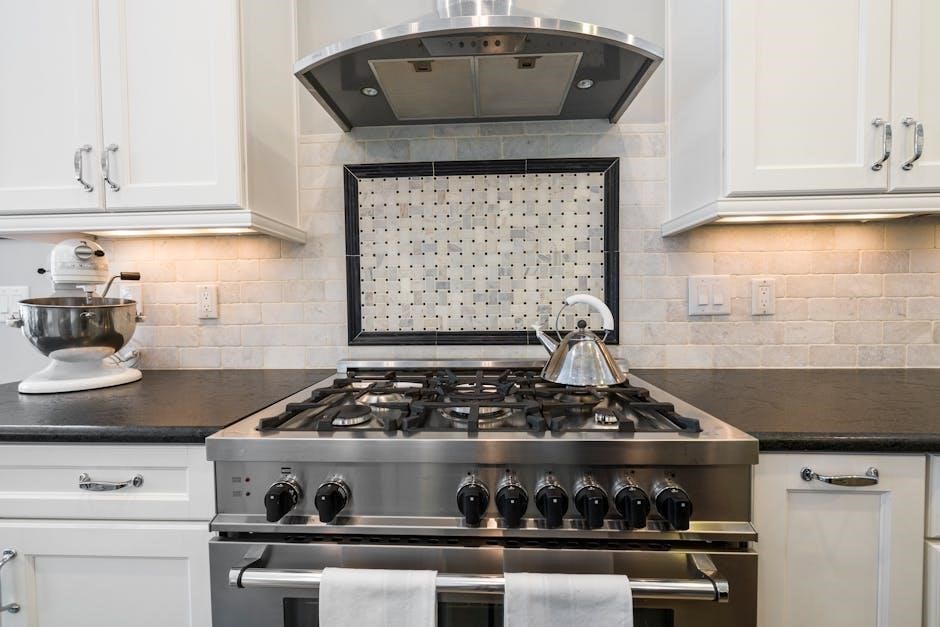
Your Frigidaire range is engineered with several key features for optimal cooking performance. These include a robust cooktop, a spacious oven, and intuitive controls. The cooktop boasts multiple burners – varying in BTU output for gas models, or element wattage for electric – designed to accommodate diverse cooking needs.
The oven offers various functionalities, potentially including self-clean, convection baking, and broiling. The control panel provides easy access to these features, alongside temperature and timer settings. Familiarize yourself with the location of the burner knobs, oven controls, and any safety features like the oven lock.
Detailed specifications for each burner/element and oven feature are outlined in subsequent sections of this manual.
Control Panel Overview
The Frigidaire range control panel is designed for intuitive operation. Typically, you’ll find dedicated knobs or touch controls for each burner or heating element on the cooktop. These controls allow for precise heat adjustment, ranging from low simmer to high heat. The oven controls, usually located centrally, manage baking temperature, cooking mode selection (bake, broil, convection), and timer functions.
A digital display often indicates the set temperature, remaining cook time, and selected oven mode. Some models include pre-programmed cooking cycles for common dishes. Familiarize yourself with the function of each button and indicator light to maximize your cooking experience. Refer to the diagram accompanying this section for a visual guide to the control panel layout.
Burner Types & Specifications (Gas Ranges)
Frigidaire gas ranges feature a variety of burner types to accommodate different cooking needs. Standard burners provide consistent heat for everyday cooking tasks. Power burners deliver higher BTU output for rapid boiling and searing. Sealed burners offer easy cleaning, preventing spills from reaching the gas valve. Some models include a simmer burner, designed for low-temperature cooking and delicate sauces.
BTU (British Thermal Units) ratings indicate burner heat output; higher BTU means faster heating. Typical Frigidaire gas burner BTU ranges are 600-17,000 BTU. Always use cookware appropriate for gas ranges, ensuring it has a flat bottom for optimal heat transfer. Regularly inspect burners for clogs and clean as needed to maintain efficient performance.
Oven Features (Self-Clean, Convection, etc.)
Your Frigidaire range oven boasts several convenient features designed to enhance your cooking experience. The self-clean cycle utilizes high temperatures to burn off food residue, eliminating the need for manual scrubbing – remember safety precautions during this process! Many models include convection baking, circulating hot air for even cooking and faster roasting. This is ideal for baking multiple trays simultaneously.
Additional features may include a warming drawer to keep cooked foods at serving temperature, and various bake settings like bake, broil, and roast. Some ranges offer a steam clean option for lighter cleaning needs. Explore the control panel to discover all available functions and customize your cooking process for optimal results.
Using the Cooktop
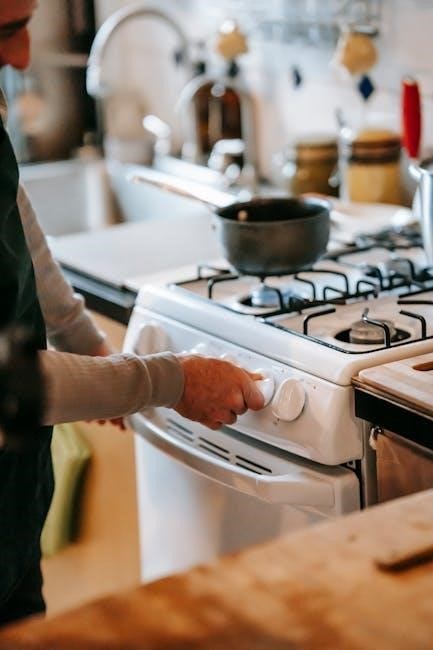
The Frigidaire cooktop is designed for versatile cooking. For gas ranges, initiating a burner involves pressing and turning the knob to the ‘light’ or ‘high’ position, then holding the knob in until the burner ignites. Electric ranges utilize elements that heat up when a control is selected. Adjusting heat levels is simple: rotate the knobs (gas) or use the control panel (electric) to select your desired setting, ranging from low simmer to high heat.
Always ensure proper cookware is used, matching the burner or element size for efficient heating. Be cautious of hot surfaces and never leave a cooktop unattended while in use. Familiarize yourself with the specific controls and features of your model for safe and effective cooking.
Lighting Burners (Gas) / Starting Elements (Electric)
Gas Burners: To light a gas burner, firmly press down and turn the control knob to the ‘Light’ or ‘High’ position. Simultaneously, you’ll need to hold the knob in for a few seconds, allowing the igniter to spark and ignite the gas. If it doesn’t light within 10 seconds, release the knob, wait five minutes, and repeat the process. A clicking sound indicates the igniter is working.
Electric Elements: Starting an electric element is straightforward. Simply turn the corresponding control knob to your desired heat setting. The element will begin to heat up almost immediately. Avoid touching the hot elements. Always ensure the burner grates or drip pans are correctly positioned before operation.
Adjusting Burner/Element Heat Levels
Gas Burners: Once lit, adjust the flame intensity by turning the control knob. Higher numbers generally correspond to higher heat. For simmering, turn the knob to the lowest setting. Observe the flame; a steady, blue flame is optimal. A yellow or flickering flame may indicate incomplete combustion and requires attention – consult the troubleshooting section.
Electric Elements: Adjusting electric element heat is equally simple; Rotate the control knob to select your desired heat level, ranging from ‘Off’ to ‘High’. Elements cycle on and off to maintain the selected temperature. The indicator light will illuminate when the element is active. Remember elements retain heat even after being switched off.
Using the Oven
Getting Started: Before first use, it’s recommended to run a high-temperature bake cycle (450°F for 30 minutes) to burn off any manufacturing residues. Ensure the oven is empty during this process. Always use oven mitts when handling hot cookware. Familiarize yourself with the oven’s control panel for precise temperature and mode selection.
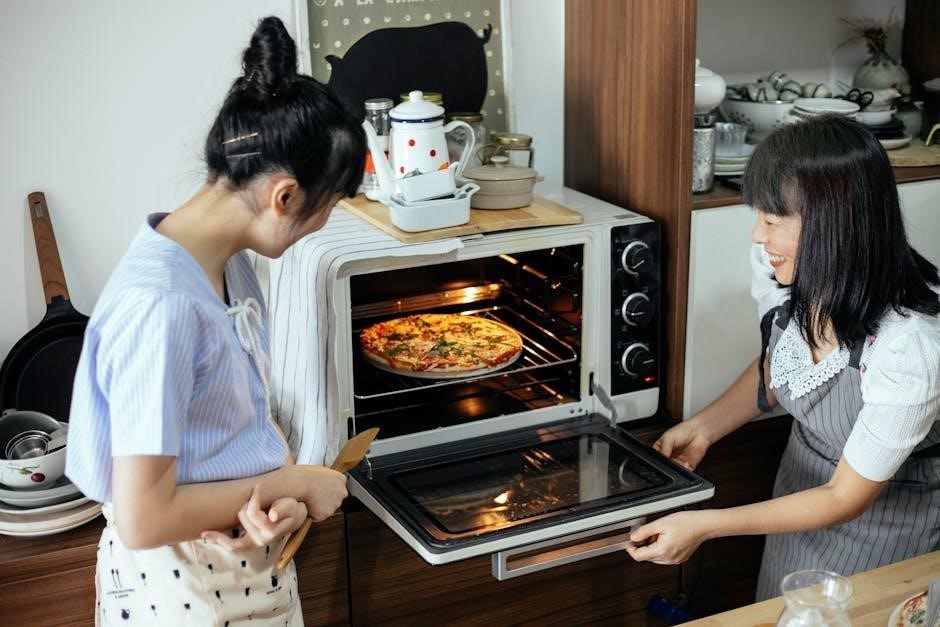
Baking & Broiling: This Frigidaire range offers versatile oven functions. Explore bake, broil, and convection options (if equipped). Refer to recipes for specific temperature and time recommendations. For optimal results, preheat the oven thoroughly before placing food inside. The broil function utilizes intense top heat, ideal for browning and finishing dishes – always supervise when broiling!
Setting Oven Temperature & Bake Mode
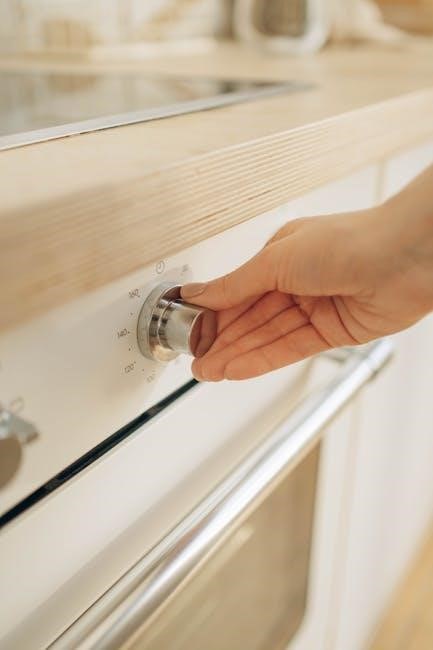
Temperature Control: To set the desired oven temperature, use the control panel’s temperature up/down arrows. The display will show the set temperature. For accurate baking, ensure the temperature is correctly set before starting. The oven will maintain the selected temperature throughout the baking process.
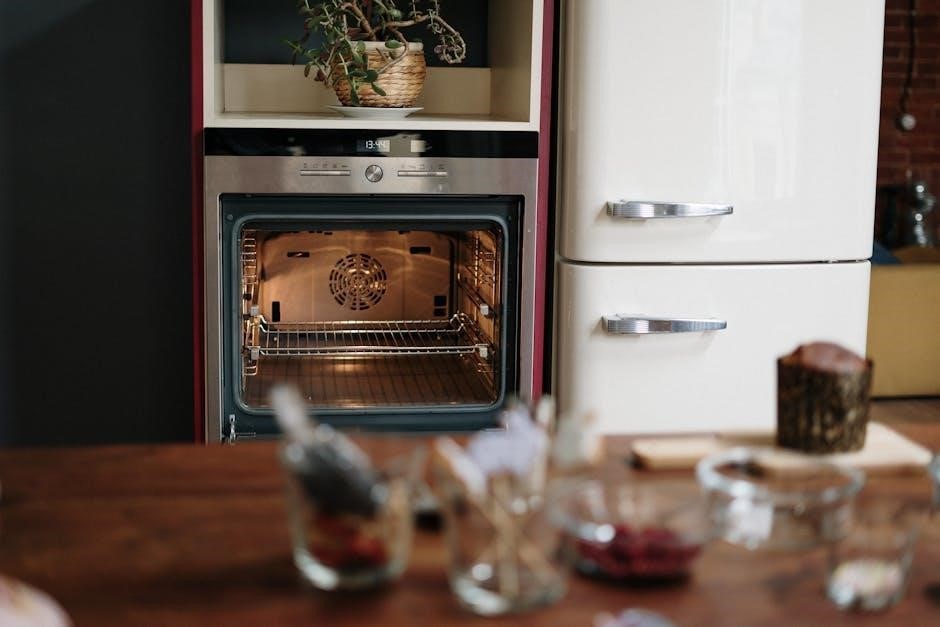
Bake Mode Selection: Press the “Bake” button on the control panel to activate standard bake mode. This mode uses heat from the bottom element for even cooking. Some models feature multi-baking options; consult your specific model’s features. Always allow the oven to preheat fully before placing food inside for consistent results. Verify the correct mode is selected before initiating the baking cycle.
Using Broil Function
Broil Mode Activation: To utilize the broil function, press the “Broil” button on the control panel. This directs intense heat from the upper element, ideal for browning and finishing foods. Select either “Hi Broil” for maximum heat or “Lo Broil” for gentler browning, depending on your recipe’s requirements.
Broiling Guidelines: Position the oven rack appropriately – typically the highest or second-highest position – for optimal results. Always use broil-safe cookware. Monitor food closely during broiling, as it cooks rapidly. Leave the oven door slightly ajar during broiling to prevent overheating and ensure proper ventilation. Never use aluminum foil to line the broiler pan, as it can melt.
Utilizing Convection Baking (If Applicable)
Convection Mode Explained: If your Frigidaire range features convection baking, a fan circulates hot air throughout the oven, ensuring even heat distribution and faster cooking times. To activate, press the “Convection Bake” button on the control panel. This is perfect for baking multiple items simultaneously or achieving consistent results with larger dishes.
Adjusting Recipes for Convection: Generally, reduce baking temperature by 25°F (15°C) when using convection; Also, check for doneness slightly earlier than the recipe suggests. Avoid opening the oven door frequently during convection baking, as this can disrupt the airflow and affect cooking performance. Convection is excellent for roasting meats, baking cookies, and preparing casseroles.
Self-Cleaning Oven Operation
Introducing the Self-Clean Cycle: Your Frigidaire range offers a convenient self-cleaning cycle to eliminate baked-on messes. This high-temperature process burns off food residue, leaving your oven sparkling clean. Before initiating, remove all racks, cookware, and any loose debris from the oven interior. Ensure the oven door can fully lock; do not attempt to force it open during operation.
Safety First: The self-clean cycle generates significant heat. Keep children and pets away from the oven during this process. Avoid touching the oven exterior, as it will become extremely hot. Proper ventilation is crucial; open windows slightly if possible. The cycle duration varies depending on the soil level selected – typically between 2 to 4 hours.
Preparing for Self-Clean Cycle
Essential Preparations: Before initiating the self-clean cycle on your Frigidaire range, meticulous preparation is key for optimal results and safety. Begin by completely removing all oven racks, baking stones, thermometers, and any aluminum foil. These items can become damaged or pose a fire hazard during the high-heat cleaning process.
Cleaning Loose Debris: Scrape away any large food particles or spills from the oven floor. While the self-clean cycle handles baked-on residue, removing loose debris prevents excessive smoke and odor. Wipe down the oven door frame with a damp cloth. Ensure the oven door closes properly and can lock securely – a crucial safety feature during operation. Finally, ventilate your kitchen by opening windows.
Self-Clean Cycle Procedure & Safety
Initiating the Cycle: To begin the self-clean cycle, press the “Self-Clean” button on your Frigidaire range’s control panel. Select the desired cleaning duration – typically ranging from 2 to 4 hours, depending on soil level. The oven door will automatically lock for safety reasons and remain locked throughout the entire process. Do not attempt to force it open!
Safety Precautions: During the self-clean cycle, the oven reaches extremely high temperatures. Keep children and pets away from the range. Avoid touching the oven exterior, as it will be very hot. A slight odor is normal, but if excessive smoke occurs, immediately stop the cycle and ventilate the kitchen. Once the cycle completes and the oven cools, the door will unlock automatically.
Troubleshooting Common Issues
Problem: Burner or element fails to ignite or heat. Solution: First, verify the power supply or gas connection. For gas ranges, ensure the gas supply valve is open. Check for any obstructions blocking the burner ports. For electric ranges, confirm the element isn’t damaged. If issues persist, consult a qualified technician.
Problem: Oven isn’t heating to the set temperature. Solution: Ensure the oven is set to the correct bake mode and temperature. Verify the oven sensor isn’t faulty. Avoid overloading the oven, as this can affect heating performance. If the problem continues, professional service may be required to diagnose and repair the heating element or control board.
Burner/Element Won’t Light/Heat
Gas Burners: If a burner doesn’t light, first check the gas supply is on. Ensure the burner ports aren’t clogged with food debris; clean them with a small wire. Verify the igniter is clicking – if not, it may need replacement. A weak or absent click indicates an igniter issue. For sealed burners, ensure proper alignment.
Electric Elements: If an element doesn’t heat, confirm the range is receiving power. Inspect the element for visible breaks or damage. A broken element requires replacement. Check the control panel settings to ensure the element is activated. If the element appears intact but still doesn’t heat, a faulty control board might be the cause, requiring professional diagnosis.
Oven Not Heating Properly
Initial Checks: If your oven isn’t heating adequately, verify the temperature setting and bake mode are correct. Ensure the door is fully closed; the safety interlock prevents operation if ajar. Check the power supply to the range, confirming it’s receiving electricity.
Heating Element Issues: Inspect the bake and broil elements for visible breaks or damage. A faulty element won’t generate heat. If the elements appear intact, the issue could be a malfunctioning oven temperature sensor or a failing control board. These components regulate oven temperature and require professional diagnosis and potential replacement. A consistently inaccurate oven temperature necessitates service.
Care and Cleaning
Regular Maintenance: Maintaining your Frigidaire range ensures optimal performance and longevity. After each use, allow the cooktop and oven to cool completely before cleaning. Daily wiping of spills on the cooktop prevents buildup. For the oven interior, routine cleaning minimizes baked-on residue.
Cleaning Solutions: Use mild dish soap and warm water for most surfaces. Avoid abrasive cleaners, as they can scratch the finish. Stainless steel cleaners are recommended for stainless steel components. For stubborn stains in the oven, a baking soda paste can be effective. Always rinse thoroughly and dry with a soft cloth. Never use oven cleaner on self-cleaning models before running a self-clean cycle.
Cooktop Cleaning Procedures

Daily Wipe-Downs: After each cooking session, once the cooktop is cool, wipe down the surface with a damp, soapy cloth to remove spills and splatters. This prevents residue from baking on and becoming difficult to remove. For light messes, this simple step is often sufficient.

Stubborn Residue: For baked-on food, apply a paste of baking soda and water. Let it sit for 15-20 minutes, then gently scrub with a non-abrasive sponge or cloth. Avoid harsh scouring pads, which can scratch the surface. Rinse thoroughly with clean water and dry with a soft cloth. For stainless steel cooktops, use a stainless steel cleaner and polish in the direction of the grain.
Oven Interior Cleaning
Routine Cleaning: Regularly wiping up spills as they happen minimizes the need for extensive cleaning. After the oven cools, use a damp cloth with mild dish soap to wipe down interior surfaces. Avoid abrasive cleaners, as they can damage the oven lining.
For Baked-On Residue: A paste of baking soda and water can tackle tougher messes. Apply, let sit for several hours (or overnight), then scrub gently. Alternatively, use a commercially available oven cleaner, following the manufacturer’s instructions carefully – ensure adequate ventilation. After cleaning, wipe the interior thoroughly with a clean, damp cloth to remove any cleaner residue before using the oven again.
Warranty Information & Contact Details
Limited Warranty: Your Frigidaire range is covered by a one-year limited warranty against defects in materials and workmanship from the original purchase date. This warranty includes parts and labor for repairs performed by authorized service technicians. The stainless steel components have a limited lifetime warranty against rust-through.
Contacting Frigidaire: For warranty claims, service requests, or general inquiries, please visit our website at [insert website address here] or call our customer support line at [insert phone number here]. Please have your model number and serial number readily available when contacting us. Our customer service representatives are available Monday through Friday, 8 AM to 5 PM EST.